
Spatial Workarounds
Why Sawtelle is Carrying the Burden of the Westside Housing Crisis


In 2022, Mayor Karen Bass initiated the Executive Directive 1 (ED 1) program to allow developers an expedited route to build 100% affordable housing in Los Angeles. West LA Sawtelle has been a hotbed for developers buying up single-family (R1) properties to redevelop them as dense affordable housing, leaving some community members questioning the ‘why’ and the ‘how’. While the community may seek to preserve a specific nostalgia towards low-rise neighborhood character, this paper discusses the nuances of Sawtelle’s radical urban planning history as it relates to diverse zoning stipulations and proximity to public transportation. These nuances set Sawtelle apart from neighboring Westside communities; as its community pride is not based purely on protecting property values. Rather, Sawtelle embodies a rich ecosystem that nurtures and welcomes those who work there, care for the area, and need a place to rest.
Introduction: Gossip in the park about ED1 construction in Sawtelle
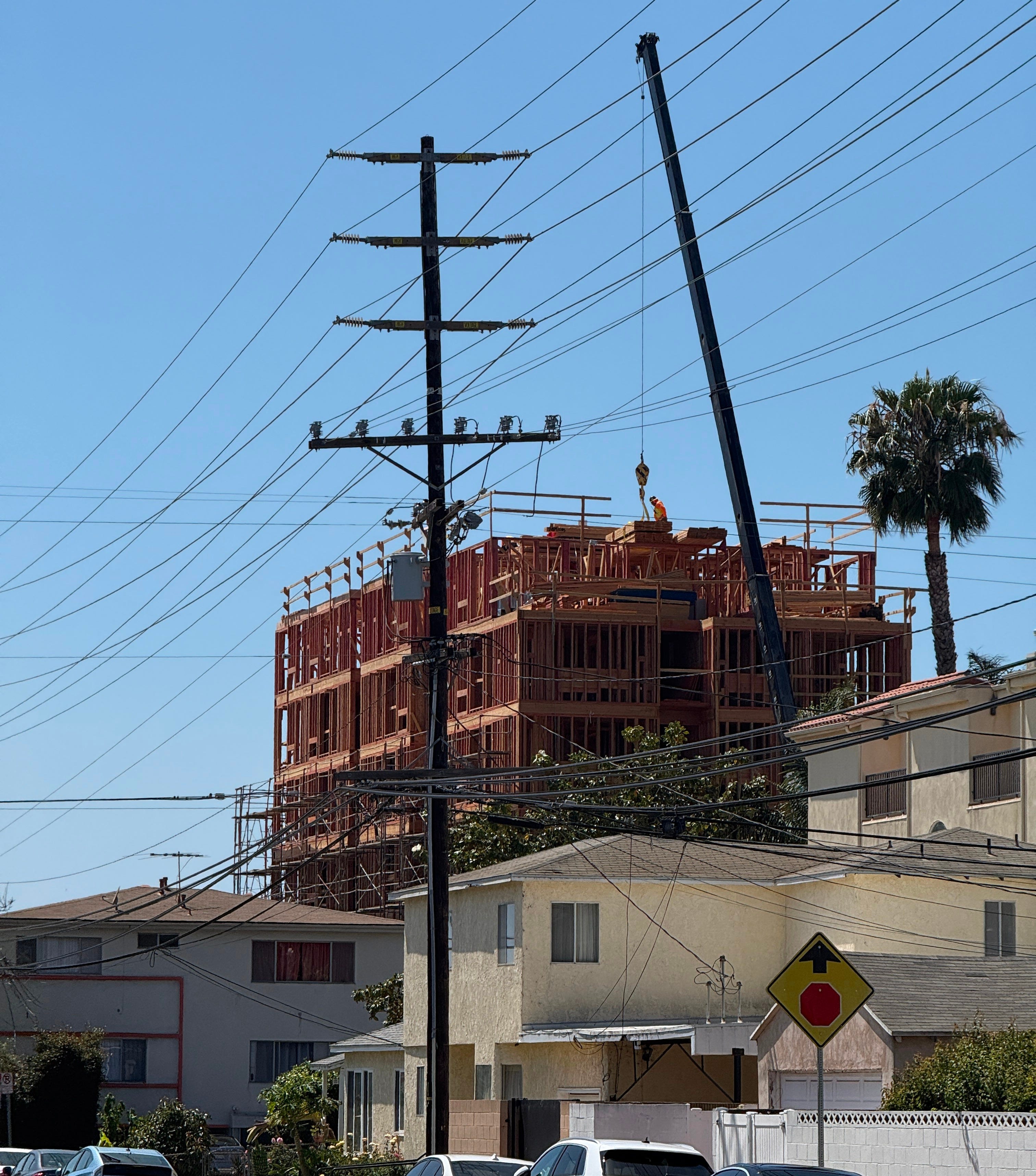
Stoner Park in Sawtelle is the best place for play, leisure, lounging, and gossiping in west LA. I frequent this park almost every day with my daughter; our favorite spots are the playground, shady areas on the fields before 5pm, and the beloved, highly contested dog run. In the last three months, getting to the park has looked different. I walk past construction sites that spill over sidewalks and local street parking areas. My main concerns have to do with safe stroller access; I usually take a detour so I don’t encumber the stress worrying about blocked sidewalks or 2x4’s being transported with an overhead crane right above the walking path. The construction sites are Executive Directive 1 (ED1) affordable housing projects that were approved in 2024.
On several occasions, I have overheard residents lamenting about the tall, six-story buildings rising above the street. The stark contrast in building height is certainly something to gossip about, as the new developments are placed next to single-family homes and lower-density multi-family properties.
“...can’t believe they’re putting those up right across the street...”
“...why don’t they just build them at the VA across the way...”
I am always struck by the commentary. In my head, I want to validate their feelings. Many residents bought into a specific, mid-century American dream of quiet neighborhood stability, and seeing such densely populated lots built right up to setback lines presents a sense of whiplash. This is not what many people say they signed up for when they purchased their home over thirty years ago. As a millennial renter and an advocate for more infill affordable housing, I have been slightly obsessed watching the construction process unfold and grow vertically. Living down the street from these new developments sparked an interest in me to learn more about ED1; what makes it unique and what the challenges are.
The Invisible Grid
Why are ED1’s getting built in Sawtelle and not Brentwood or Pacific Palisades?
Los Angeles City Mayer Bass’ Executive Directive 1 (ED1) was established in late 2022 to streamline 100% affordable housing production throughout LA. Affordable housing is defined as a five or more unit multi-family project with units accessible for residents making 80% of Area Median Income (AMI) or lower, or with 20% of units for residents at 120% AMI with an average of 80% AMI or lower. In Los Angeles, the average median income is $106,600.[1]
ED 1:
- expedites projects through streamlining enhancements, shortened review periods at all stages of the City Planning project review process, and reduced filing fees
- Projects don’t require discretionary review, meaning there is no public comment process.
- applies to all proposed shelter and 100% affordable housing projects in areas zoned for multifamily housing.
Currently, close to 47,000 units have been proposed, and almost 35,000 of them have been approved. In Council District 11, there are 28 projects on the case summary, with 10 projects in Sawtelle.[2] The rest are in Westchester or Palms/Del Rey. Exempt from the list are Venice, Brentwood and Pacific Palisades. The reason for this is further explained by ED1 Loophole #1.
The two sites of focus in this article are located at 1734 S. Barrington Avenue[3] and 1747 S. Stoner Avenue[4]. Both properties were purchased by Passo, a developer founded in 2024 to deliver high-quality* affordable housing[5]. The star on high-quality is meant as a question as to whether there is validity to the description. As seen by the plans listed on the LA City Planning website, the projects will provide a sterile box with little to no landscape or respite areas for the residents, no balconies to enjoy ‘light and air’ as most modernist affordable housing developers say they will provide. As with most, if not all ED1 projects, there is no on-site parking, making the projects feasible and easy for developers to invest in.


1734 S. Barrington Avenue used to have a single-story apartment building[6]. The original application states that the ED1 project will take over three properties in total (however only the 1734 address is being redeveloped). The lot next to 1734 is a multi-story apartment building which appears unoccupied as it stands today. While it is unclear if tenants were displaced from the previous 1734 apartment building, there are looming issues with tenants being displaced because of ED1 projects, which is further explained by ED1 Loophole #2.


1747 S. Stoner Avenue was a 1-story single-family house with a duplex and detached garage[7]. The original application states that the ED1 project will take over two properties. It seems that developers are trying to maximize on sites they can acquire to have more square footage to work with. Nonetheless, the narrow 50’x150’ lots offer opportunities for an expanded side yard and perhaps balconies that face onto the side yard.
Although the priority is on unit quantity, developers should be considering quality of life in these projects. Additionally, the two sites in focus do not provide for families in need. Also questionable is who can afford these units, which are primarily 300 square foot studios and 400 square foot 1-bedroom units. While these projects aim to be low-cost, low budget, it will be necessary and worthwhile to conceptualize how families sit in to the equation; what is parking minimums weren’t 0, but closer to 75% of the requirement? What if quality of life and enjoying light and air and landscape was built into project budgets early on? We cannot continue to build jail-like affordable housing schemes; there has got to be more personality towards budget-friendly construction.
ED1 Loophole #1
ED1 explicitly exempts single-family (R1) zones
Sawtelle is taking the burden of almost 50% of ED1 projects on the Westside, which is a lot considering that 74% of LA’s housing stock is zoned as single-family (R1).[8] Kenneth Mejia, City Controller of LA, has a map that clearly shows that Sawtelle and Venice are the two multi-family areas on the Westside. Venice is exempt from ED1 due to community pushback, political jargoning, proximity to the ocean, and the California Coastal Act - more on this and downzoning has a lot to do with why ED1 exempts R1 zones from affordable housing.
In an article from the LAist[9], Mayor Bass publicly acknowledged her gift to fast-track affordable housing in LA, even in suburban single-family areas. The article brings attention to the politics of building in single-family zones, including one of the biggest laws that stood out to me - that the California Fair Housing mandate applies to this situation. If we do not comply with the demands to deliver nearly 200,000 affordable housing units by 2029, we will not meet the fair housing demand. Additionally, fair housing means moving beyond the long-standing forms of racial segregation by zoning that LA is known for - we must think about the opportunities that exist to live more ‘cheek-by-jowl’ than we are comfortable with.
It’s no secret that single-family zones like Brentwood and Pacific Palisades have a long history fighting to keep their R1 status. Meanwhile Sawtelle, which is sandwiched between the 405 Freeway, the 10 Freeway, and Route 66 Santa Monica Boulevard, has become a multi-family haven due to its long history with social exclusion, proximities to multi-modal corridors and small grain footprints. In my research on community advocacy within neighborhoods, I learned that Brentwood and Pacific Palisades had well-organized homeowner associations in the 1970s to campaign against zoning changes. Following periods of social unrest in the 1960s, communities in Brentwood and Palisades actively resisted the City’s attempts to rezone for more potential of density and housing for diverse populations. The elitism of wealth used neighborhood organizing to resist policies such as Proposition 13 and the California Coastal Act in 1978.[10] There were numerous concerted efforts (obviously won) to carry out downzoning campaigns as a form in redlining in the 1980s. Downzoning meant neighborhoods could restrict building heights, advocate for larger minimum lot sizes, enable more stringent parking mandates - all to restrict a diverse housing stock.[11] In the same time period, Sawtelle was rezoned to accommodate dingbat apartments when the City needed to fill a gap in housing construction.
This history is important to understand when looking at ED1 Loophole #1, in which policy and zoning has explicitly exempted R1 zones from needing to comply with regulation. Even though the policy has been revised and is in the process of being codified into the CH1A (Affordable Housing Streamlining Ordinance), single-family zones have remained out of the discussion. Workforce housing is desperately needed in suburban areas; many employees are subject to long commute times, which diminishes overall social and economic outcomes, along with the opportunity to achieve a basic healthy livelihood.
ED1 Loophole #2
ED1 has caused evictions of naturally occurring affordable housing (NOAH) and rent-stabilized buildings
Sawtelle has a 70% renter to 30% owner ratio. This statistic is what spurred the creation of the Renter’s Committee, which advocates for renter constituents towards 1) preserving naturally occurring affordable housing and rent-stabilized tenants from evictions. Many times, evictions take place in silence with developers increasing rents drastically to rent them to new tenants. This process takes away the diverse and organic nature of a community where children, families, elders, and single tenants can afford to live. It is rather traumatic and entire lives are uplifted and erased due to this process.
While many of the evictions in Sawtelle have taken place when landlords issue eviction notices to “make renovations”; which is often a façade to scare tenants into leaving on their own. As a colleague on the Renter’s Committee has experienced and explained, landlords don’t have any plans or permits for such improvements, as they simply want to clear the building. They explained that landlords are acting in exploitation of California law, using tenant buyouts as “mutual agreements”, to then reset rental prices.
What does this have to do with ED1 developments? In a recent ED1 policy update[12], rent-stabilized buildings with 12 or more units will be exempt from redevelopment, tenant relocation services have been put in place, and there is work being done on stronger renter protections. In Sawtelle, I have met several families who rent on single-family AND multi-family properties with less than 12 units, therefore more must be done to exempt all rent-stabilized buildings across LA.
The Ghost of the Westside: Sawtelle has a radical urban planning history as a multicultural, working-class neighborhood
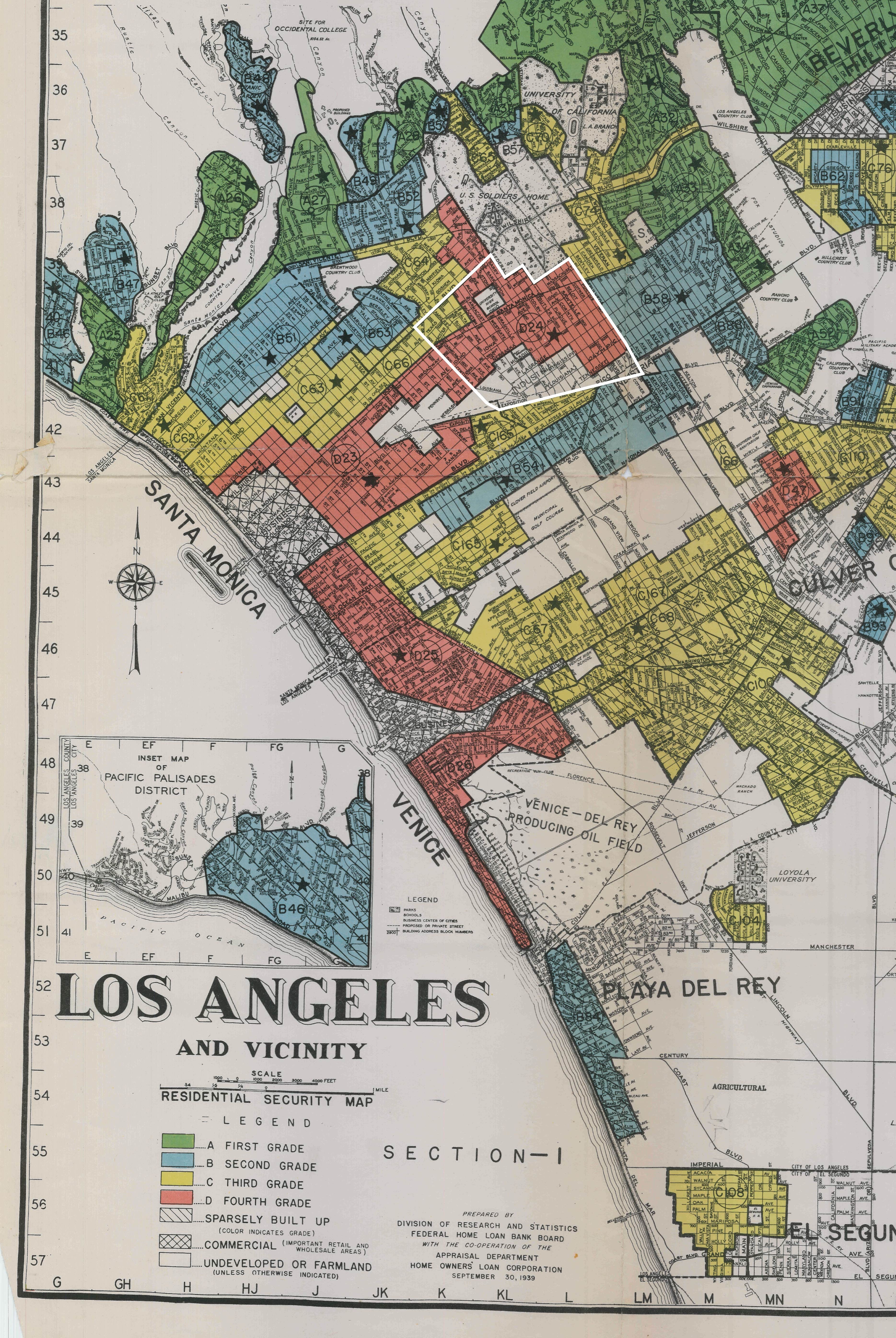
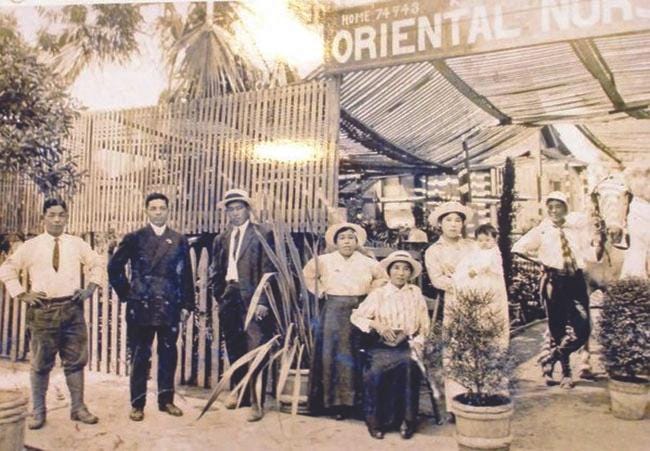
Sawtelle is a multicultural, working-class neighborhood. The area is unique because it was not born elite, and it did not establish itself as an exclusive suburban enclave. Sawtelle was a redlined community with an urban planning history of exclusion. Where wealthy enclaves like Brentwood, Palisades, Westwood banned non-white residents by way of strict property deeds, Sawtelle embraced war veteran families and Japanese communities displaced by the California Alien Land Law in 1913. Many Japanese immigrants in the area became gardeners for nearby wealthy enclaves on the Westside. They were able to purchase property for homeownership and local nurseries; before being forcibly removed to incarceration camps in Manzanar during World War II.[13] Sawtelle was an off-limits zone, with many marginalized groups being drawn to the area because of discriminatory housing and public realm hostility in neighboring areas.
The area’s proximity to major bus transit corridors that run along the boulevards of Santa Monica, Olympic, Wilshire, and Pico meant that cities are more attracted to areas like Sawtelle for development purposes. Additionally, the Metro Blue Line crosses through Sawtelle and directly linked to downtown Los Angeles.
Sawtelle’s changing skyline is not a sign of downfall; it is a continuation of its radical history as a place that makes room for people on the Westside. Its history of inclusivity remains, and through active community networks and mutual safety for one another, we can ensure that the potential influx of community to the area will be sustainable. While some of our community members defend “historic community character”, what we see in our housing stock today reflects the historical periods of exclusion of working-class people from the wealthy enclaves of the adjacent Westside.
Spatial Workarounds and Redefining Coexistence on the Westside
The idea for ‘spatial workarounds’ comes from the history of LA’s rigid zoning parameters that made it nearly impossible to house people of all incomes and ethnicities without siloing them into a specific area through redlining or downzoning. In Sawtelle, urban design typologies such as the dingbat and the motel provided housing and interstitial spaces to become safe social networks for immigrant families. ED1 projects are a modern evolution of typologies that fit a typical 50’x150’ lot to provide spatial workarounds with LA’s hostile zoning grid. Sawtelle is well poised to coexist between the demands of property ownership and spatial workarounds that show how ED1 developments can be transformative. But how do we ensure that these new, vertical, efficient use of space have character and spatial forms that provide for a wider range of activities? Where is the landscape of care embedded in these projects, or is another adaptation needed to carve out spaces for this among the evolving fabric? We need a vision that illustrates the best locations for development within an already saturated and stabilized fabric.
[1] Income and Rent Schedules: https://housing.lacity.gov/wp-content/uploads/2025/07/2025-Income-and-Rent-Schedules.pdf
[2] ED1 Overview: https://planning.lacity.gov/project-review/executive-directive-1#resources
[3] Project Plans: https://planning.lacity.gov/pdiscaseinfo/document/MTg5MDk0/32d019b8-1d0c-4d58-9258-fba315e88f6f/esubmit
[4] Project Plans: https://planning.lacity.gov/pdiscaseinfo/document/MTYzMjY0/32d019b8-1d0c-4d58-9258-fba315e88f6f/esubmit
[5] Developer’s mission statement: https://www.livepasso.com/mission
[6] Demolition Plan: https://planning.lacity.gov/pdiscaseinfo/document/MzA3Mw0/82065561-f922-4efb-8b32-0e189f041683/pdd
[7] Demolition Plan: https://planning.lacity.gov/pdiscaseinfo/document/Mjc0Nw0/82065561-f922-4efb-8b32-0e189f041683/pdd
[8] City Controller’s Easy-to-Digest Zoning Map: https://single-family-zoning.lacontroller.app/
[9] LAist article on ED1: https://laist.com/news/housing-homelessness/los-angeles-housing-affordable-executive-directive-one-ed1-mayor-karen-bass-raman-blumenfield-yimby-lawsuit
[10] Greg Morrow, The Homeowner Revolution: Democracy, Land Use and the Los Angeles Slow-Growth Movement, 1965-1992..
[11] https://www.pacificurbanism.org/publications/2020/8/12/downzoning-venice-hr924; see also https://www.pacificurbanism.org/coastal-population-by-race
[12] https://www.saje.net/revised-ed1/
[13] https://sawtelleja.org/sawtelle-japantown-and-the-future-of-america/