
Why P.S. Projects Start with a Memory
what do core memories and land have to do with each other?

Project Samsara (P.S.) is a landscape design and public art studio shaped by place, memory, and movement. Rooted in Los Angeles, we design outdoor spaces that feel as soulful and specific as the people who move through them. Our process is intuitive and informed, guided by ecological intelligence, design clarity, and deep listening. We believe in building beauty that endures. In slowing down. In tuning in. Whether we’re cultivating a quiet courtyard, small garden, playground, or reimagining a native hillside, we begin by listening to the land and those who live on it. As a designer and a creative, I believe in stories told through plants, textures, and time.
P.S. honors memory as design. The land - which is our primary canvas for outdoor spaces, places, and projects - holds memory. Land has scars, marks, indents, imprints, so to design on it means we must recognize and respect who and what has been there. After seeking permission from previous inhabitants, unlearning what we knew about it from hard-sourced data, and relearning via respect and appreciation, we may propose another addition to the land.
In the years that P.S. was being crafted, we were inspired by the 1619 Project and SAADA as platforms for relinquishing powerful narratives and reframing history. While these two references don’t necessarily live in the realm of landscape architecture, they are important reminders of whose memories are brought to the forefront of our history. At P.S., we think it is important to make creative gestures out of lived experiences.
Core Memory No.1 (circa 2001)
In my very first substack post, I wrote about memories. My upbringing and my childhood as an immigrant’s daughter definitely shape how I view P.S.’s involvement in the community and with clients, but I always come back to this excerpt from my statement of purpose for graduate school applications. Traveling, observing, and photographing moments - til this day, it is still the most fitting reason why memory is important to my work. It goes:
When I was in middle school, my parents sent me on a six-week trip to visit relatives in England*. Upon my return, it was expected that I present all the photos I’d taken of family at the places we visited; however, to my parents’ disappointment, my travel slideshow showcased only photos of the local scents, scenery, people, and materials of the various places we visited. While the trip’s focus was on family, these were the elements that truly captured my attention. The photographed moments revealed everyday people's intimate relationship with the land they occupied — and the beginning of my innate interest in cultural immersion and the movements of people through places.
*It was my first big trip abroad without my parents. I hadn't seen my relatives since I was four years old, and I remember being homesick for the first four weeks. I enjoyed the last two weeks once I got comfortable and regained some of my appetite. I had a few disposable cameras supplied by my dad. In retrospect, it was humbling to visit relatives and get a glimpse of their everyday. It was quite different than mine, and the sun didn’t shine as much as it does in southern California.


Core Memory No.2 (circa 2024)
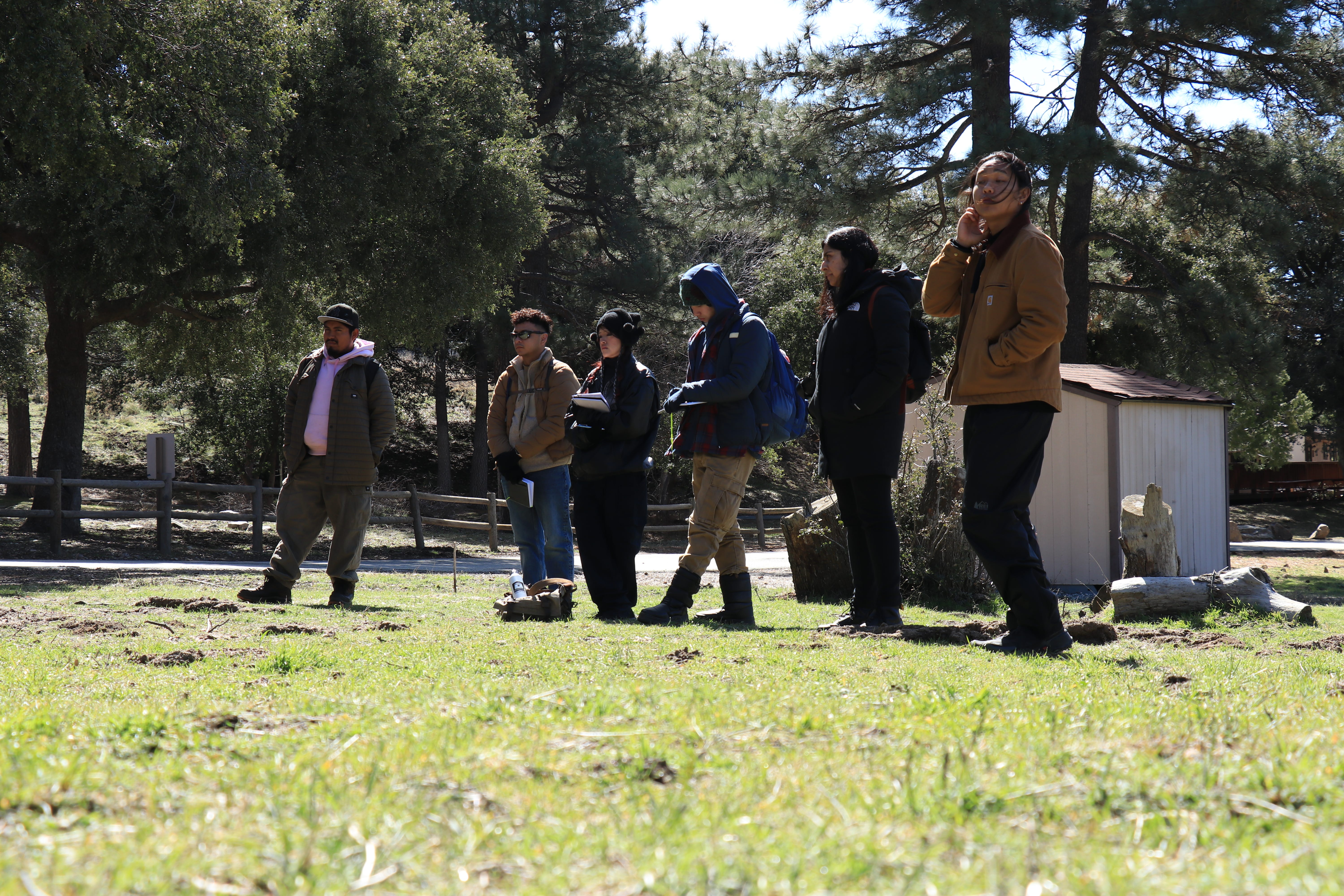
In 2023, I had an opportunity to collaborate with Michael Madrigal (an elder leader of the Cahuilla community in the Coachella Valley), the Girl Scouts of Orange County, and Camp Scherman (a campground owned by the Girl Scouts). Camp Scherman sits on Cahuilla land, and I was moved that the Girl Scout Leadership wanted to reconnect and invite members of the Cahuilla to teach about their relationship with the territory. This was in part for the CPPLA student group I was teaching, and for future girl scout troops who visit Camp Scherman.
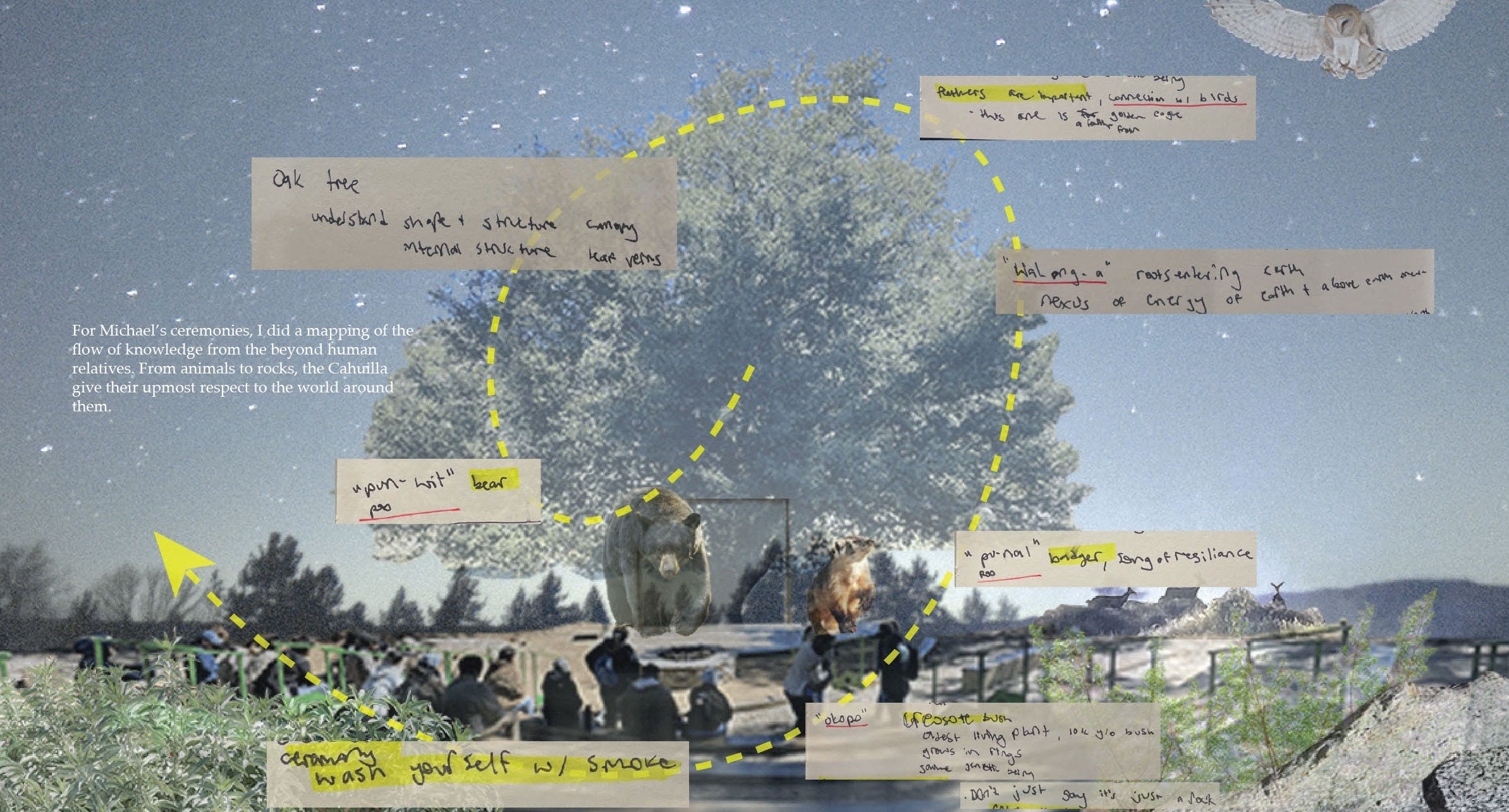
For field trip week, we took a camp trip to Camp Scherman. Michael led us on a restorative, deep-listening exercise to learn from the Live Oak on property. The Live Oak was over 100 years old and spanned 40 feet in its width. All 60 of us (students and leaders) gathered around the tree while Michael taught us how to speak to the tree, the soil, and the ground beneath us. He talked to us about how the land is not neutral, and that there was something to be learned by listening.
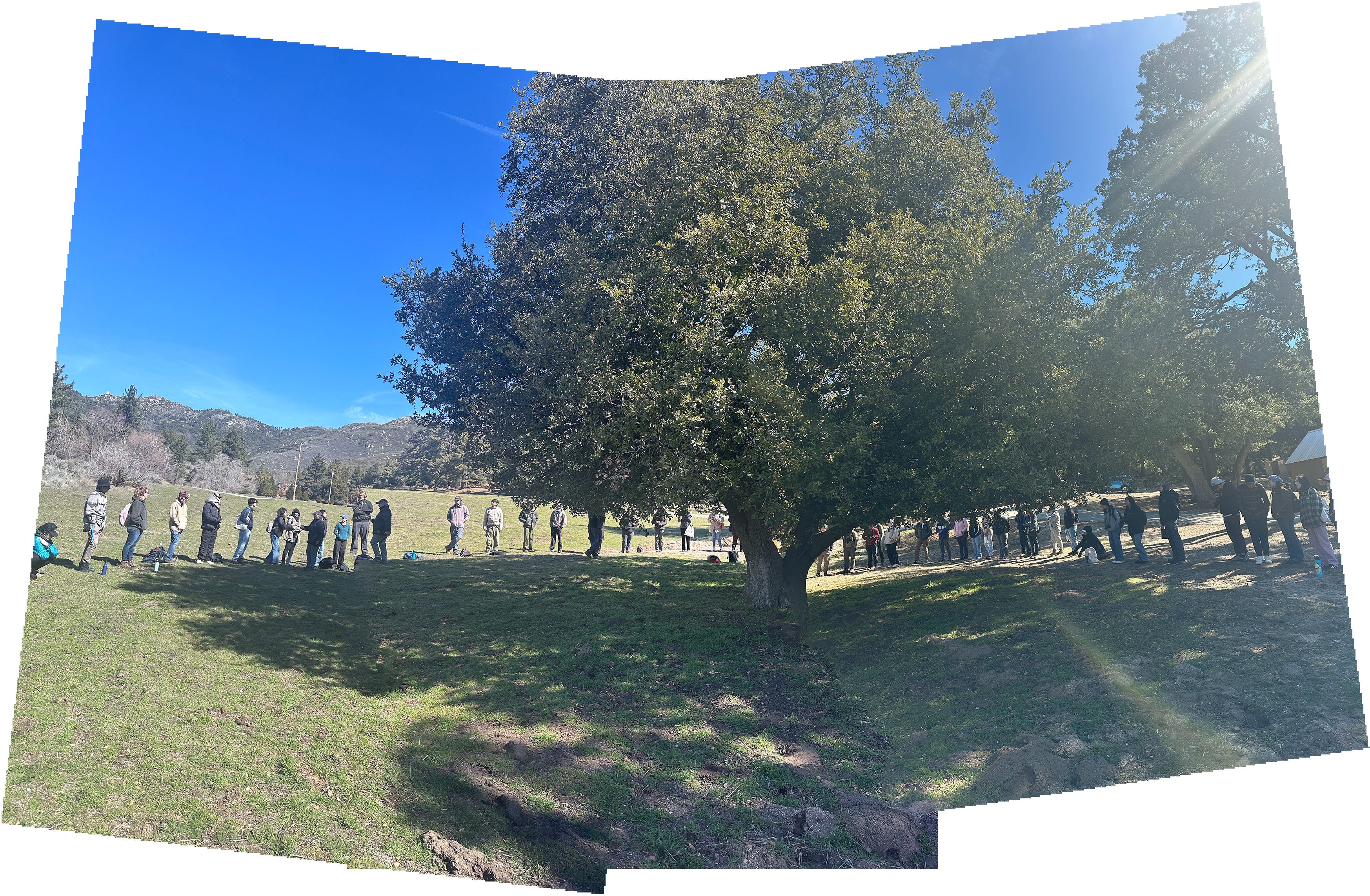
Michael’s words were profound while we were circled around the tree -
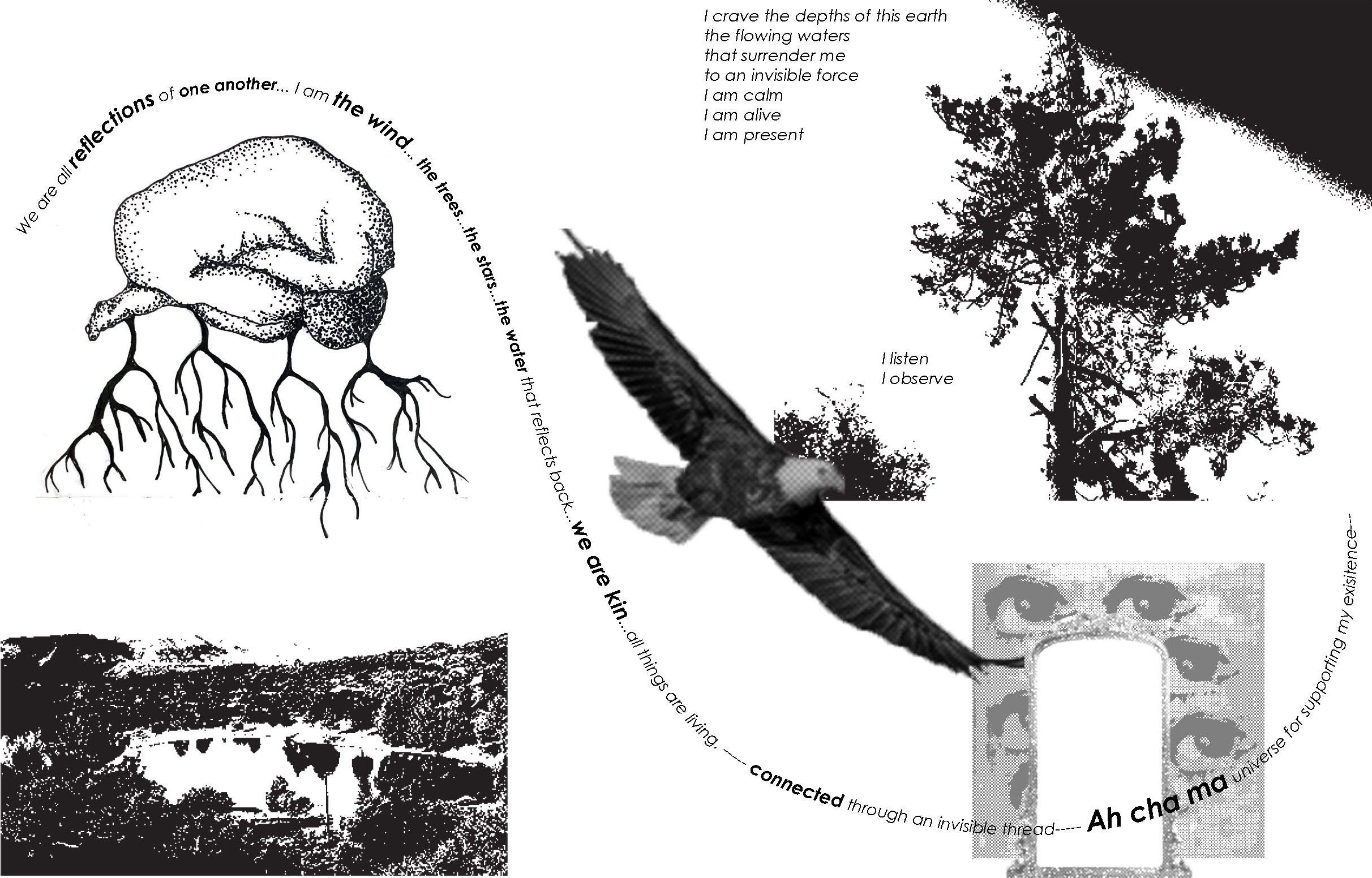
People, plants, land, animals, water, and the elements live in community called Chemingkem.
Every natural thing around us has energy, such as the rocks and trees around us.
Our ancestors reside inside all natural things around us on earth, thus we must treat our earth with utmost respect.
These sacred relationships are essential for the health and resilience of each part of the community.
The land cares for us and we care for the land, our lives depend on this.
Time is not linear, it is a cycle.
A Design Principle P.S. Lives By
Core memories have taught us to embrace what exists in the landscape today. Whether it is a vast natural setting, or a dense urban condition, there are pre-existing qualities and characteristics that inherently shape added functions and forms. At P.S., we embrace the idea of ‘doing less’. We believe that time is a cycle. Time infiltrates into the way we think, listen, draw, and when the opportunity presents itself, design.